
Ecosystem & Value Co-creation: Globalization Logic for Alliances
2025-11-26
Introduction
November 7, 2025 | Shenzhen, China
A roundtable discussion on the future of global technology standards unexpectedly avoided clichéd geopolitical rhetoric, evolving into a deep review of “technology philosophy” and “logic of survival.”
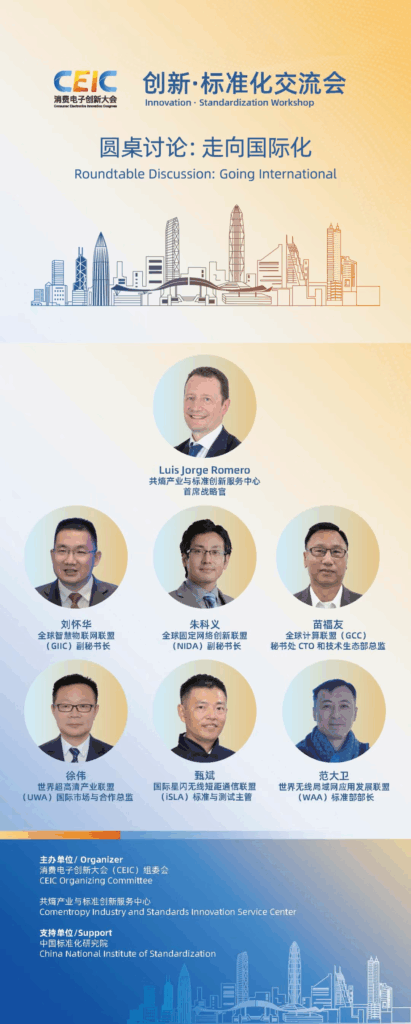
Organized by the 2025 Consumer Electronics Innovation Congress (CEIC) Committee and the Comentropy Industry & Standards Innovation Service Center, with support from the China Institute of Standardization, six major international organizations converged in the Hetao International Organization Headquarters(HIOH). The debut of this “1+6” formation sends out a positive and powerful signal: China’s emerging technology alliances are evolving from mere technical standards setters to builders of global industrial ecosystems. They are no longer content with finding their position on an old map but are striving to draw new routes for global technological collaboration with their unique “value gravity.”
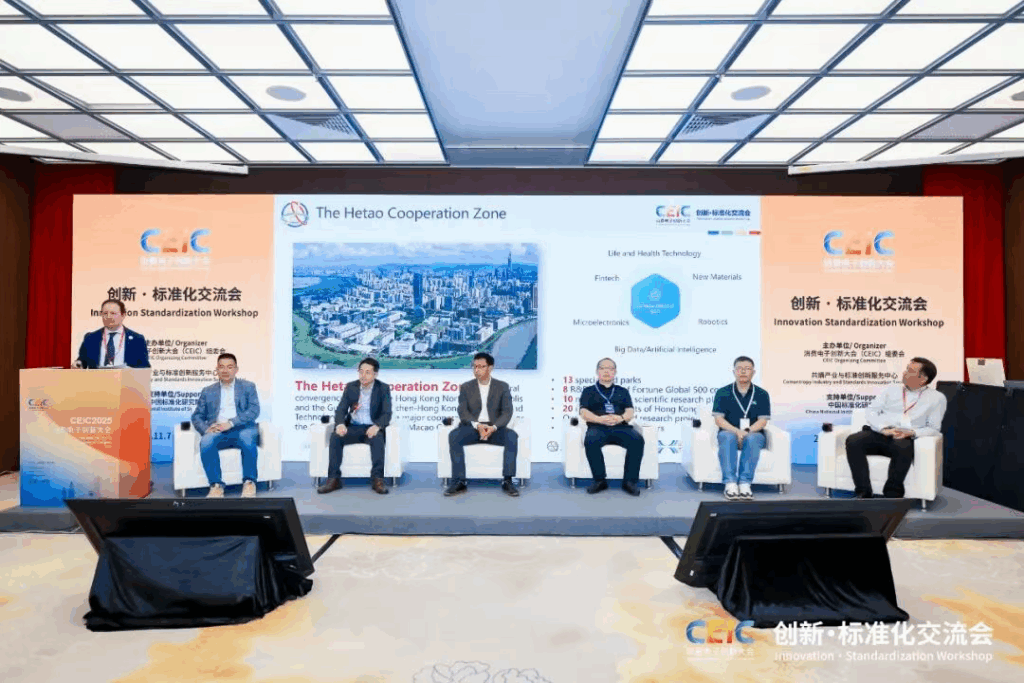
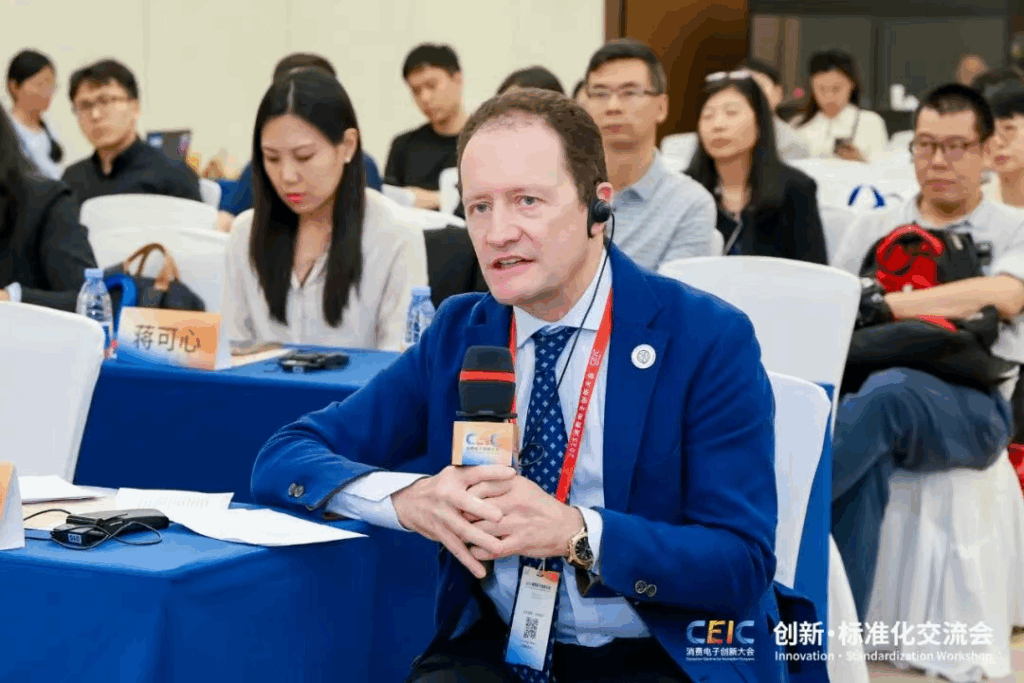
The 75 minutes of intense debate have clearly outlined a new internationalization path, moving from “organizational breakthroughs” to “ecosystem integration.”
Four Key Perspectives
In this dialogue, four perspectives formed the critical nodes of cognitive breakthrough:
1. Redefining the Niche: From “Connection Technology” to “Application Experience”

Why establish a new organization like WAA (World Wireless LAN Application Development Alliance) when IEEE (Wi-Fi) and 3GPP (5G) already exist? Is this an unnecessary “fragmentation”?
David Fan, the director of the WAA Standards Department, did not shy away from this sharp question. Using the metaphor of “making bricks versus building houses,” he pointed out the pain point of the traditional system: the absence of end users.
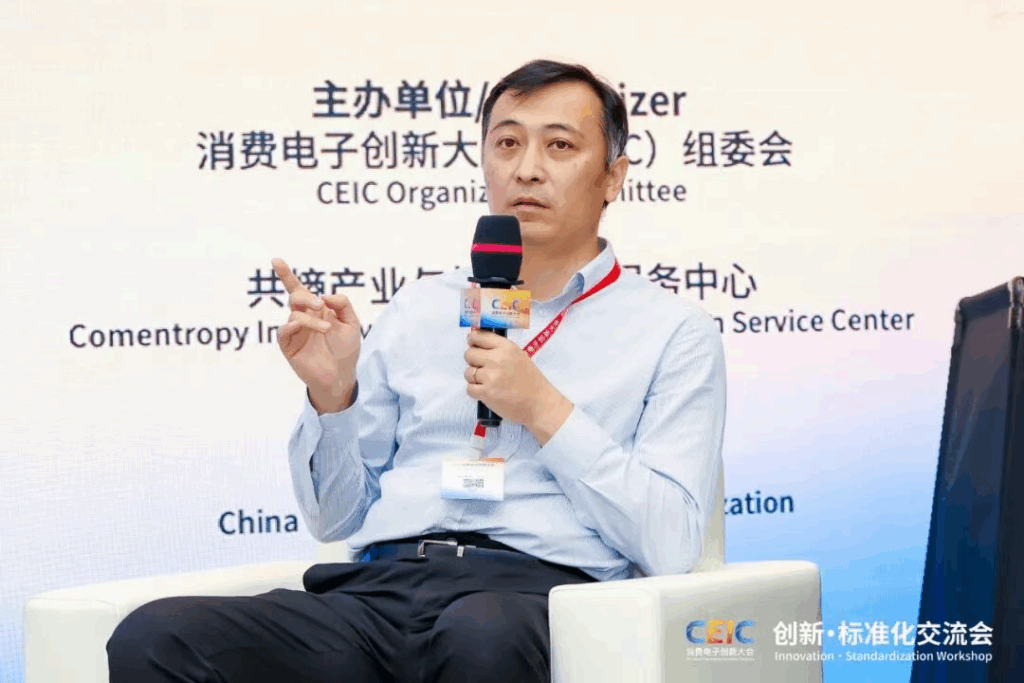
David Fan (Director of the Standards Department, WAA):
American firms excel in basic tech like IEEE’s protocols but fail in UX. In dense Wi-Fi areas, connectivity slows. As focus shifts from connectivity to UX, IEEE handles initial connections, while WAA tackles ongoing lag, bridging technology and experience gaps.
The First Layer of Value Gravity: The Right to Define Experience
The competition in global standards is shifting from “connection technology” to “application experience.” IEEE has addressed the question of “Can it connect?” WAA, on the other hand, seeks to answer, “Is the connection smooth?”
This highlights the ecological niche of emerging standards organizations: finding complementary spaces within existing systems and jointly driving the industry’s evolution from “connection” to “experience.”
2. The Real Truth About Internationalization: An Outcome, Not a Goal
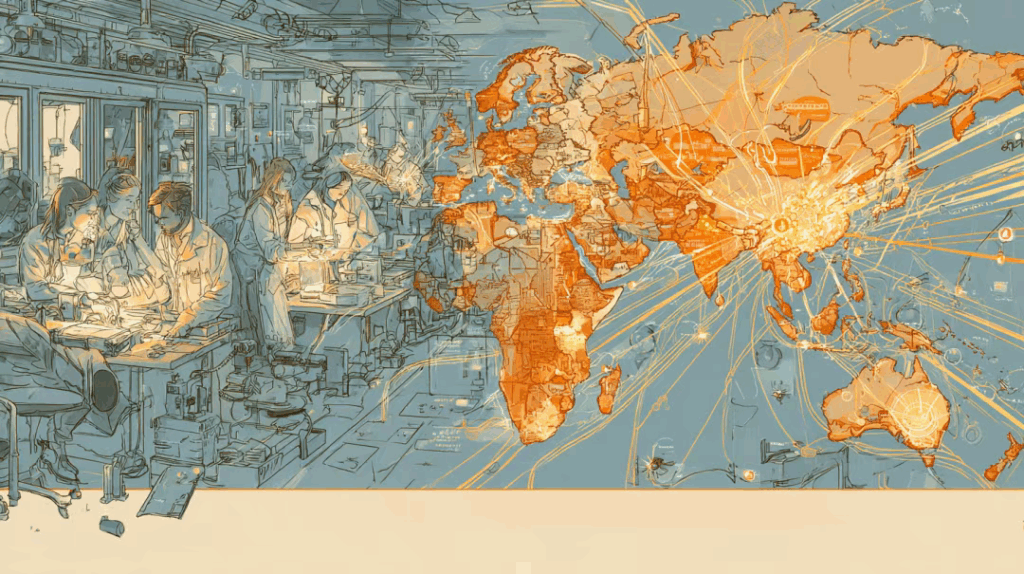
How do emerging technology standards go international? Is it through subsidies and aggressive promotion, or policy advocacy?
International SparkLink Wireless Short-Range Communication Alliance (iSLA) and Global Intelligent Internet of Things Consortium (GIIC) provided a very pragmatic answer: forget about internationalization, focus on scarcity. If your technology solves a pain point that others cannot, internationalization naturally follows.
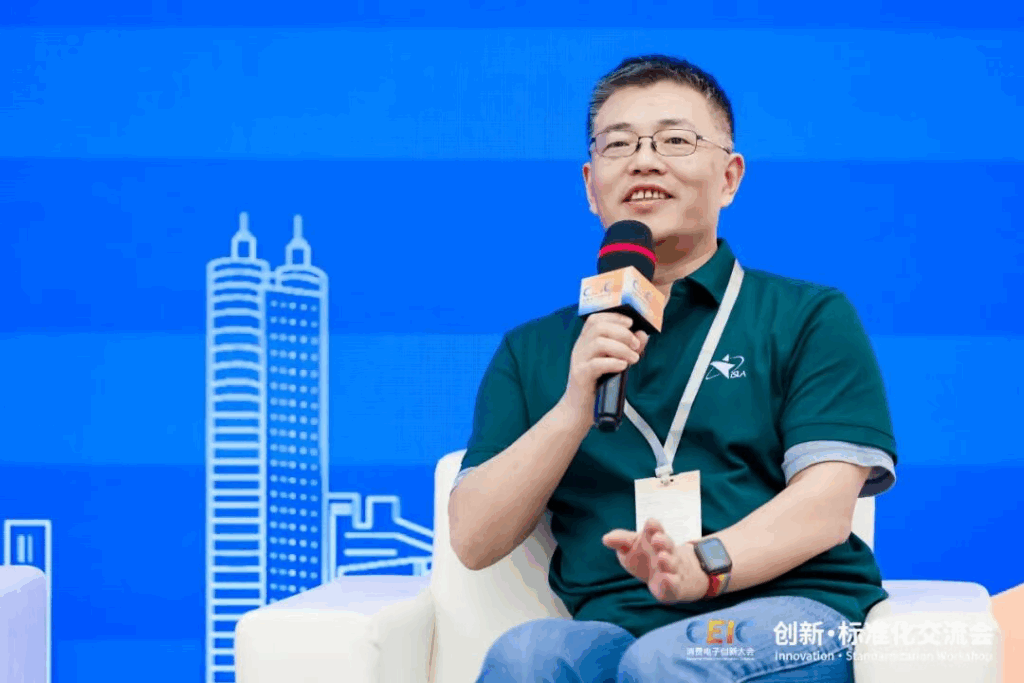
Zhen Bin (Manager of Standards and Testing, iSLA)
Internationalization results naturally when our standards, like deterministic latency for gaming mice and secure car keys, solve real issues. Emerging from a competitive market, we focus on performance over Bluetooth and Wi-Fi limitations, leading our products and standards to global adoption.
The data validates this logic. Over five years, iSLA has grown from 90 members to 1,200, with chip shipments increasing from zero to 70 million units by 2024, and an expected milestone of 100 million units by 2025. This wasn’t achieved through “promotional campaigns” but by addressing unsolved problems.
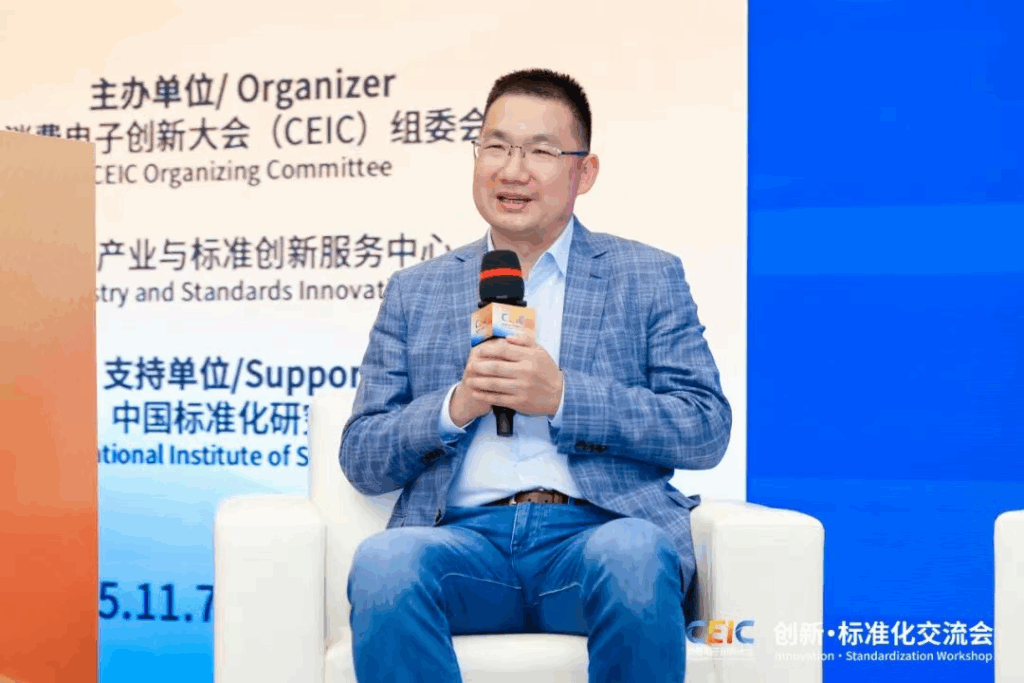
Liu Huaihua (Deputy Secretary-General, Global Intelligent Internet Of Things Consortium (GIIC)) used the metaphor of a “kitchen knife” to explain the logic of the business loop:
Liu Huaihua (Deputy Secretary-General, GIIC)
Technology gains value only when it meets specific needs, like a sharp knife for slicing sashimi. Similarly, HarmonyOS must prove its economic value in practical settings like ports and factories to achieve international adoption.
The Second Layer of Value Gravity: Scenario Validation Power
The internationalization of technology alliances isn’t about “convincing others to accept our rules,” but about “proving irreplaceable value in real-world scenarios.” The domestic market serves as the best proving ground. If a technology can establish itself in China—one of the most competitive markets, contending with international standards like WiFi, Bluetooth, and NFC—it naturally gains the capability for internationalization.
Internationalization is not a strategic initiative but the natural result of value spillover through demonstrated capabilities.
3. The Paradigm Shift of AI: From “Centralized Authority” to “Distributed Consensus”
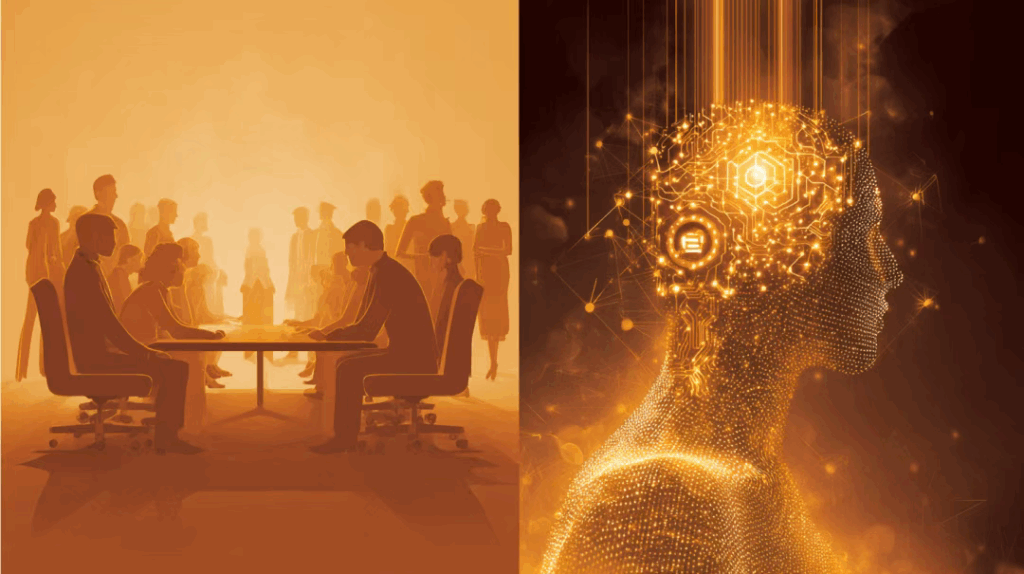
While many are still discussing how to optimize the review processes of expert committees, UWA (World Ultra HD Video Industry Alliance) has made a disruptive prediction: AI may bring an end to the current organizational operation model.
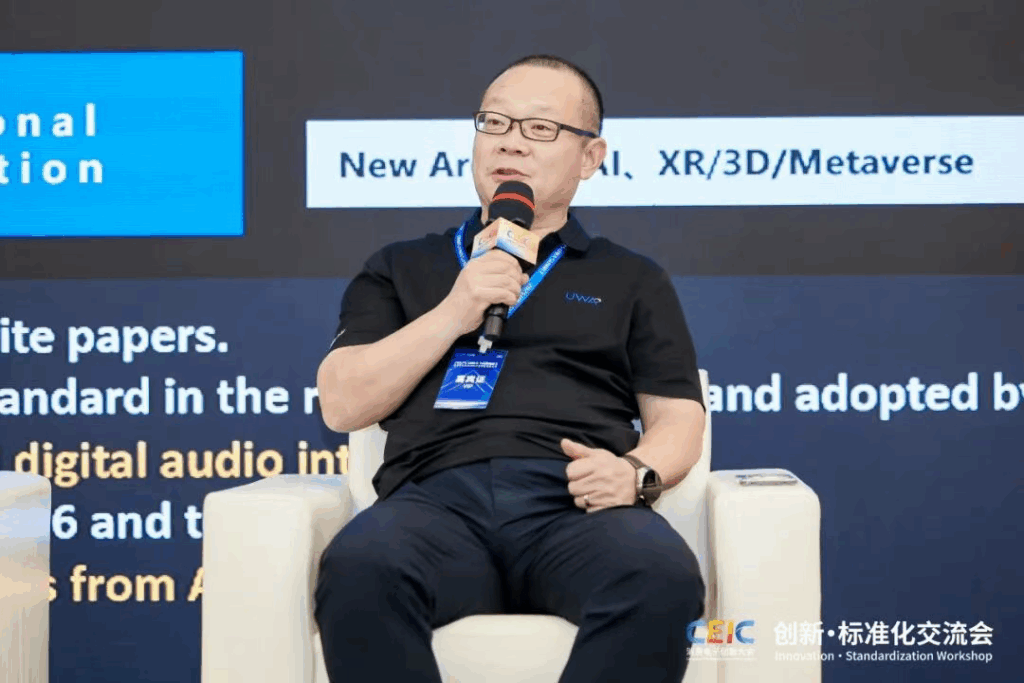
Xuwei(Director of International Market and Cooperation, UHD World Association(UWA)) :
Current standards are slow. With AI, we anticipate daily changes and the emergence of AI-generated standards, similar to printing currency in real-time. This shift from centralized to distributed standards will revolutionize rule-making, marking a paradigm shift where AI is more than just a tool.
This view echoes the “standards + specifications” dual-track system being explored by the GCC (Global Computing Consortium). Miao Fuyou, CTO and Director of the Technology Ecosystem Department, Global Computing Consortium (GCC)admitted: “Under normal procedures, it takes 3 to 5 years for a standard to go from initiation to publication. By the time it’s released, the technology might already have changed.” Their solution is to upgrade expert committees into open-source communities and adopt a dual-track system of “Standards” (rigorous but slow) + “Specifications” (quickly iterative), enabling the industry to have both authoritative guidance and rapid responsiveness.
The Third Layer of Value Gravity: Paradigm Adaptability
This is not just about improving efficiency; it’s about reconstructing governance logic.
If future “standards” are no longer static documents but rather dynamic consensus and optimal solutions calculated by AI in real-time based on live data, then:
- Whoever controls the largest datasets and scenarios will hold the foundational power to set the rules.
- Traditional organizational structures, built around “expert authority,” will face disintegration.
- Emerging alliances that can achieve “AI-native” transformation first will gain a generational advantage.
A deeper question looms: If AI can “3D print” standards on demand, who will truly own the power to create rules? Will it be traditional international organizations, AI companies, or nations and alliances with the largest application scenarios?
4. The Philosophy of Ecosystem Integration: Conservative Innovation and Proactive Collaboration

In response to external concerns that “too many alliances will lead to global technological fragmentation,” NIDA (Global Fixed Network Innovation Alliance) , GCC and WAA jointly showcased the globalization wisdom of Chinese technology organizations through their approach of “conservative innovation.”
This is the essence of “conservative innovation”: preserving the foundation of interconnectivity while creating value through application scenarios—two objectives that coexist harmoniously. As Zhu Keyi put it, “Connectivity is the foundation, quality is the goal.” Emerging organizations like NIDA are seeking breakthroughs at this intersection of balance.
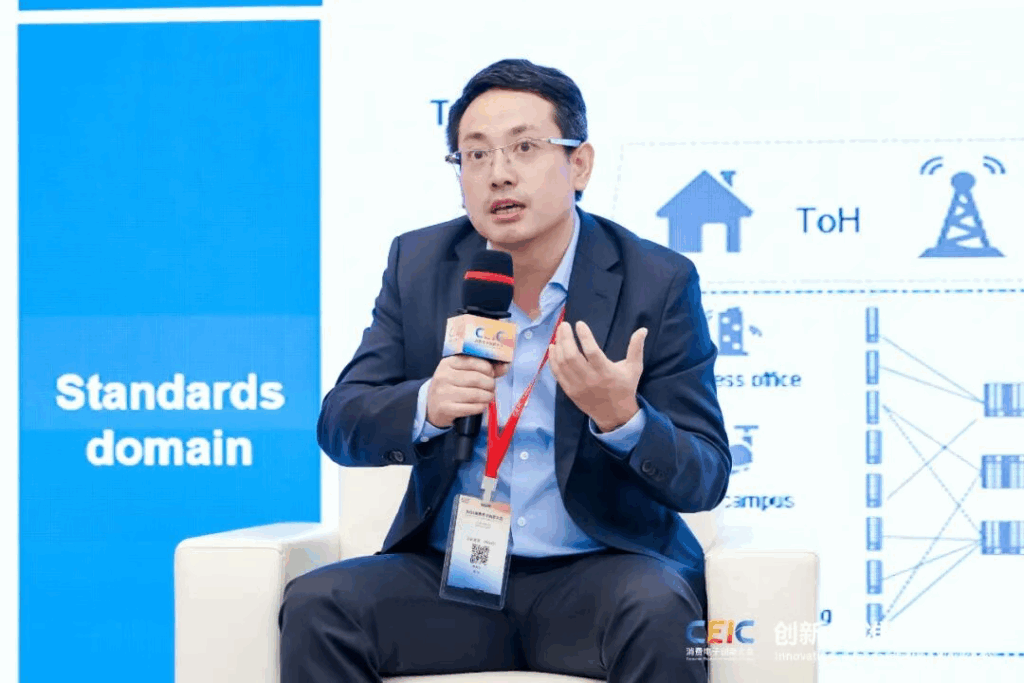
Zhu Keyi (Deputy Secretary-General, NIDA):
If the TCP/IP fragmented, it would be catastrophic. We promote “conservative innovation”: maintaining a unified internet foundation while allowing differentiation in sectors like finance and healthcare. This approach leverages China’s AI strengths globally without causing fragmentation.
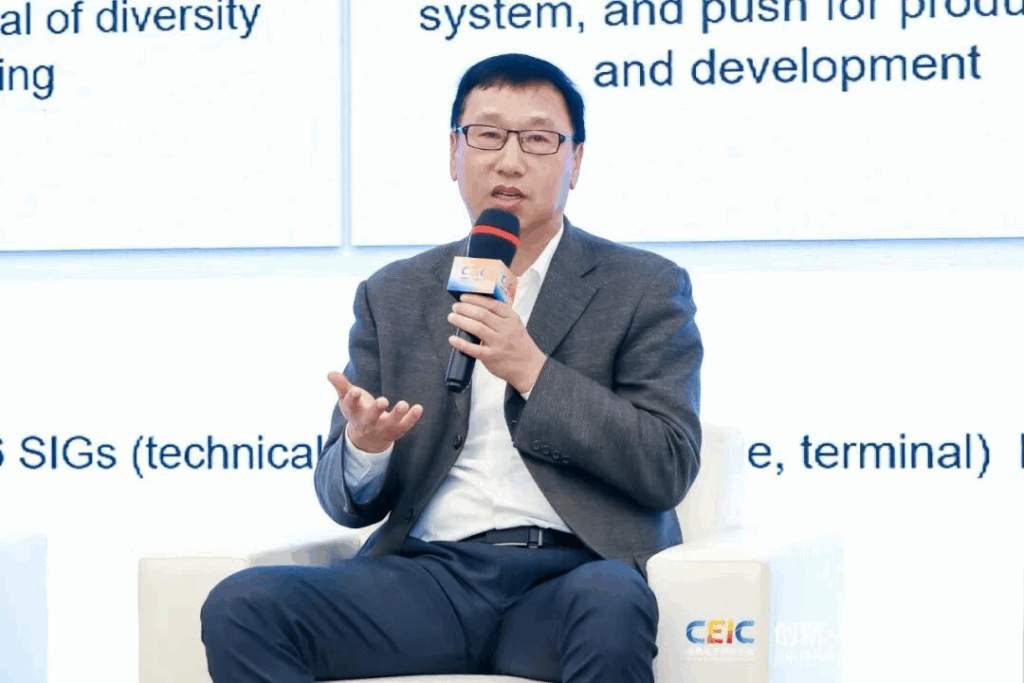
Miao Fuyou (CTO and Director of the Technology Ecosystem Department, GCC):
Standards are crucial as they unify an already fragmented industry. They serve not as a cause of division but as the last defense against it, mending and patching splintered products and supply chains.
This defense was practically supported by David Fan: “As long as there is communication, it’s all good. In July this year, we went to an IEEE meeting, and the IEEE chairman said, ‘No one has ever explained the Chinese market to us like this before.’” WAA with IEEE, GCC with Global Platform, and UWA with ITU have all established liaison relationships, proving that emerging organizations are not trying to “start from scratch” but are seeking complementary spaces within the existing system.
The Fourth Layer of Value Gravity: Ecosystem Integration Power
This reveals a critical understanding: differentiation is not fragmentation. True fragmentation occurs when foundational protocols diverge (e.g., the internet splitting into incompatible networks). Emerging organizations, on the other hand, aim to innovate while preserving interconnectivity. This approach not only avoids damaging the global technological ecosystem but could also serve as a tool to “stitch together” industry needs and technological solutions.
The key lies in adhering to two principles:
- Application innovation — Boldly explore differentiated solutions in specific scenarios.
- Proactive collaboration — Establish formal cooperation (liaison) with traditional international organizations.
Conclusion: From “Searching on Old Maps” to “Charting New Routes”
The most valuable aspect of this roundtable discussion is that it did not linger on the slogan of “We must go global,” but instead delved deeply into the fundamental logic of “Why should we go global?”
This path can be summarized in eight words: Ecosystem Expansion, Value Co-creation.
It is not about the isolated export of standards but about finding a complementary position within the global industrial ecosystem, creating the gravitational pull of collaboration through irreplaceable value.
From David Fan’s “experience supplementation,” to Bin Zhen’s “value spillover,” to Wei Xu’s “AI consensus,” and finally to Keyi Zhu’s “conservative innovation,” these insights collectively outline the value coordinate system of emerging technology alliances.
They are no longer passive followers of international rules, but are becoming:
- Definers of scenarios
- Validators of value
- Explorers of paradigms
- Integrators of ecosystems
As Wei Xu remarked during the discussion:
“Our ultimate goal is not standards for the sake of standards, but solving consumer pain points.”
This, perhaps, is the only true pass for all technology alliances to go global—not to constrain others with rules, but to attract partners with value.
Workshop Information
Date: November 7, 2025, 14:05-15:20
Location: Futian International Convention and Exhibition Center, Peony Hall, Shenzhen
Organizers: 2025 Consumer Electronics Innovation Congress (CEIC) Committee, Comentropy Industry and Standards Innovation Service Center
Support: China Institute of Standardization
Moderator: Luis Jorge Romero (Comentropy)
Participating Organizations (Hetao “1+6” Model):
iSLA – International SparkLink Wireless Short-Range Communication Alliance
UWA – UHD World Association
WAA – World WLAN Application Alliance
GIIC – Global Intelligent Internet Of Things Consortium
GCC – Global Computing Consortium
NIDA – Network Innovation and Development Alliance
Comentropy – Comentropy Industry and Standards Innovation Service Center
This article is copyrighted by the 2025 CEIC Committee and Comentropy Industry and Standards Innovation Service Center. Quotation and distribution are permitted provided that the source is cited.

feel free to scan the QR code
to join the “Comentropy Family”
and work together
to advance industry and standards!